भारतीय अर्क चिकित्सा विज्ञानं अवं अनुसन्धान केंद्र
Indian Spagyric Education And Research Foundation

Autonomous Body Registered with Govt of India Under Society Registration Act 1860

Dedicated For Education, Research, Development of Promotion of Spagyric Alchemy

Incorporated under MSME Govt. of India

ISO 9001: 2015 & GMP Complaince Organisation

This data is collected by the organization from various resources. If you have information to strengthen and enhance this history, please contact to include names and pictures of important personalities and contributors of electrohomeopathy.

यह डेटा विभिन्न संसाधनों के लिए संगठन द्वारा एकत्र किया गया है। यदि आपके पास इस इतिहास को मजबूत और सुधारने के लिए कोई जानकारी है, तो कृपया संपर्क करें ताकि इलेक्ट्रोहोम्योपैथी के महत्वपूर्ण व्यक्तियों और योगदानकर्ताओं के नाम और तस्वीरें शामिल की जा सकें।

Founders and Contributors of ElectroHomeopathy

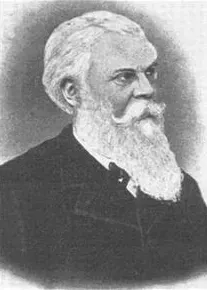
Dr Carl Friedrich ZIMPEL (1800-1878)

The nineteenth century, the German physician Carl Friedrich Zimpel, M.D., Ph.D. (1800-1878), began a new production of spagyric medicaments. This widely travelled and learned man had originally been an engineer. He devoted himself late in life to the study of medicine and acquired a doctorate in philosophy and medicine. He was awarded the Prussian gold medal for art and science and was an honorary member of the Mineralogical Society of the University of Jena. In 1849, he was established himself in London as a homeopathic physician. Zimpel devoted himself intensively to the study of the works of Paracelsus and Glauber. At the age of 70 and after his key experiences with Count Cesare Mattei (1809-1896), he published book on the subject. Gradually, he developed an important production, known today as Zimpel method which is also descried in German Pharmacopoeia [HAB] a high level, internationally known manufacturing Pharmacopoeia, whose products are today available in many countries of the world. In the meantime, many classical texts have been reprinted, in connection with which the attitude of the publishers vacillates strongly. Available, for instance, are the works of Paracelsus, Basilius Valentines, Glauber, Van Helmont, Andreas Libavius, and others.

Dr. Count Cesare Mattei (1809-1896)

The nineteenth century, the German physician Carl Friedrich Zimpel, M.D., Ph.D. (1800-1878), began a new production of spagyric medicaments. This widely travelled and learned man had originally been an engineer. He devoted himself late in life to the study of medicine and acquired a doctorate in philosophy and medicine. He was awarded the Prussian gold medal for art and science and was an honorary member of the Mineralogical Society of the University of Jena. In 1849, he was established himself in London as a homeopathic physician. Zimpel devoted himself intensively to the study of the works of Paracelsus and Glauber. At the age of 70 and after his key experiences with Count Cesare Mattei (1809-1896), he published book on the subject. Gradually, he developed an important production, known today as Zimpel method which is also descried in German Pharmacopoeia [HAB] a high level, internationally known manufacturing Pharmacopoeia, whose products are today available in many countries of the world. In the meantime, many classical texts have been reprinted, in connection with which the attitude of the publishers vacillates strongly. Available, for instance, are the works of Paracelsus, Basilius Valentines, Glauber, Van Helmont, Andreas Libavius, and others.

Dr Theodore KRAUSS (1864-1924)​

The nineteenth century, the German physician Carl Friedrich Zimpel, M.D., Ph.D. (1800-1878), began a new production of spagyric medicaments. This widely travelled and learned man had originally been an engineer. He devoted himself late in life to the study of medicine and acquired a doctorate in philosophy and medicine. He was awarded the Prussian gold medal for art and science and was an honorary member of the Mineralogical Society of the University of Jena. In 1849, he was established himself in London as a homeopathic physician. Zimpel devoted himself intensively to the study of the works of Paracelsus and Glauber. At the age of 70 and after his key experiences with Count Cesare Mattei (1809-1896), he published book on the subject. Gradually, he developed an important production, known today as Zimpel method which is also descried in German Pharmacopoeia [HAB] a high level, internationally known manufacturing Pharmacopoeia, whose products are today available in many countries of the world. In the meantime, many classical texts have been reprinted, in connection with which the attitude of the publishers vacillates strongly. Available, for instance, are the works of Paracelsus, Basilius Valentines, Glauber, Van Helmont, Andreas Libavius, and others.

Dr. Augustus Müller

The nineteenth century, the German physician Carl Friedrich Zimpel, M.D., Ph.D. (1800-1878), began a new production of spagyric medicaments. This widely travelled and learned man had originally been an engineer. He devoted himself late in life to the study of medicine and acquired a doctorate in philosophy and medicine. He was awarded the Prussian gold medal for art and science and was an honorary member of the Mineralogical Society of the University of Jena. In 1849, he was established himself in London as a homeopathic physician. Zimpel devoted himself intensively to the study of the works of Paracelsus and Glauber. At the age of 70 and after his key experiences with Count Cesare Mattei (1809-1896), he published book on the subject. Gradually, he developed an important production, known today as Zimpel method which is also descried in German Pharmacopoeia [HAB] a high level, internationally known manufacturing Pharmacopoeia, whose products are today available in many countries of the world. In the meantime, many classical texts have been reprinted, in connection with which the attitude of the publishers vacillates strongly. Available, for instance, are the works of Paracelsus, Basilius Valentines, Glauber, Van Helmont, Andreas Libavius, and others.

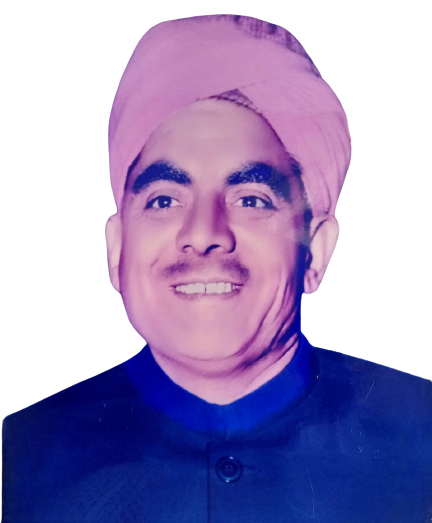
Vaidh Sh. Ram Manohar Ji (1881-1949)

The nineteenth century, the German physician Carl Friedrich Zimpel, M.D., Ph.D. (1800-1878), began a new production of spagyric medicaments. This widely travelled and learned man had originally been an engineer. He devoted himself late in life to the study of medicine and acquired a doctorate in philosophy and medicine. He was awarded the Prussian gold medal for art and science and was an honorary member of the Mineralogical Society of the University of Jena. In 1849, he was established himself in London as a homeopathic physician. Zimpel devoted himself intensively to the study of the works of Paracelsus and Glauber. At the age of 70 and after his key experiences with Count Cesare Mattei (1809-1896), he published book on the subject. Gradually, he developed an important production, known today as Zimpel method which is also descried in German Pharmacopoeia [HAB] a high level, internationally known manufacturing Pharmacopoeia, whose products are today available in many countries of the world. In the meantime, many classical texts have been reprinted, in connection with which the attitude of the publishers vacillates strongly. Available, for instance, are the works of Paracelsus, Basilius Valentines, Glauber, Van Helmont, Andreas Libavius, and others.

Dr. N.L. Sinha ji

Dr. Nand Lal Sinha was born on November 30, 1889, in Lucknow. He began practicing electro-homeopathic medicine in 1908 in the district of Sitapur (UP). In 1911, he earned his MDEH from the Superior Independent School of Applied Medical Science in London, under the headmastership of Dr. H.W. Anderschow. In 1912, Dr. Sinha established an electro-homeopathic institution in Sitapur, where he practiced until 1918. He authored a book titled Fundamental Laws and Materia Medica of Electro Homeopathy, which he published and sent to various countries, including Italy, France, and Germany, where it was translated into multiple languages such as French and German. In 1920, Dr. Sinha founded the National University of Electro Complex Homeopathy in Kanpur, from which thousands of students have graduated and gone on to practice electro-homeopathy. Between 1925 and 1938, he expanded his work through the publication of weekly and monthly newsletters such as Chitranshi, Dhanvantari, and Najat. In 1941, he founded the Electro Complex Homeopathic Cooperative Society to further the development and dissemination of electro-homeopathy. This period saw a surge in interest, with many homeopathic physicians, including Dr. Radha Madhav Halder, Dr. H.D. Banerjee, Dr. D.K. Paul, and Dr. Yudhveer Singh (the founder of Jawaharlal Nehru Homeopathic College in Delhi and a former health minister of Delhi), adopting and practicing electro-homeopathy successfully. They also contributed to the literature on the subject. Dr. Nand Lal Sinha’s contributions to the 100-year journey of electro-homeopathy in India are invaluable. He spent his life promoting the field, authoring literature, and training thousands of students at the colleges run by his organization across the country. He passed away on August 30, 1979, marking the end of one of the brightest pioneers of electro-homeopathy in India, but his legacy continues through the countless followers he left behind.

Harbalist Jean Cosnil

Hearbalist Mr. Jean Cosnil gave us Corsnil Decimal Dilution System

Vaidh Sh. Amar Sahni Ji (1881-1949)

Nadi Vaidh Sh. Amar Sahni ji from Faridabad contributed his vast knoledge of plants and worked on electrohomeopathy principles to treat diseases and aware people about this natural treatment. He worked with his mentor Sh. Ram Manohar ji to develop various remedies of different ailments. later he joined with Sh. P.B. Sabharwal ji and started ISERF Indian Spagyric Education and research foundation with an aim of educating people and exploring this pathy around countryUnder the guidance of both his mentors, Sh. Amar Sahni ji dedicated himself to extensive research, delving deeper into the principles of electrohomeopathy and the therapeutic potential of various plant species. He passionately believed in the power of nature’s bounty to heal and restore balance within the human body. His unwavering commitment resulted in the formulation of unique remedies that catered to a wide array of health concerns, ranging from chronic ailments to everyday discomforts. Moreover, the establishment of the ISERF Indian Spagyric Education and Research Foundation marked a significant milestone in the propagation of holistic healing methods. The foundation became a hub for knowledge sharing, where like-minded individuals gathered to discuss and explore the integration of traditional remedies with modern practices. Under Sh. Sahni ji’s leadership, ISERF not only aimed to educate practitioners but also to empower individuals by providing them with the tools to make informed health choices rooted in nature. Workshops, seminars, and clinical demonstrations were organized across various locations, sparking interest and curiosity in electrohomeopathy among attendees. As a result, a network of practitioners began to form, united by a common vision: to promote natural healing and educate the masses on the benefits of plant-based treatments. Sh. Amar Sahni ji, alongside Sh. P.B. Sabharwal ji, envisioned a future where the principles of electrohomeopathy would gain mainstream acceptance and recognition, making complementary healthcare more accessible to all.

Nadi Vaidh Sh. Ram ji

Dr. P.B. Sabharwal

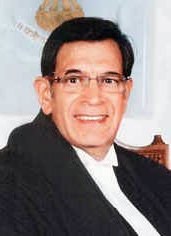
Justice Y.K. Sabharwal

Lorem ipsum dolor sit amet, consectetur adipiscing elit. Ut elit tellus, luctus nec ullamcorper mattis, pulvinar dapibus leo.

How can I help you?
Alex: WordPress Expert